



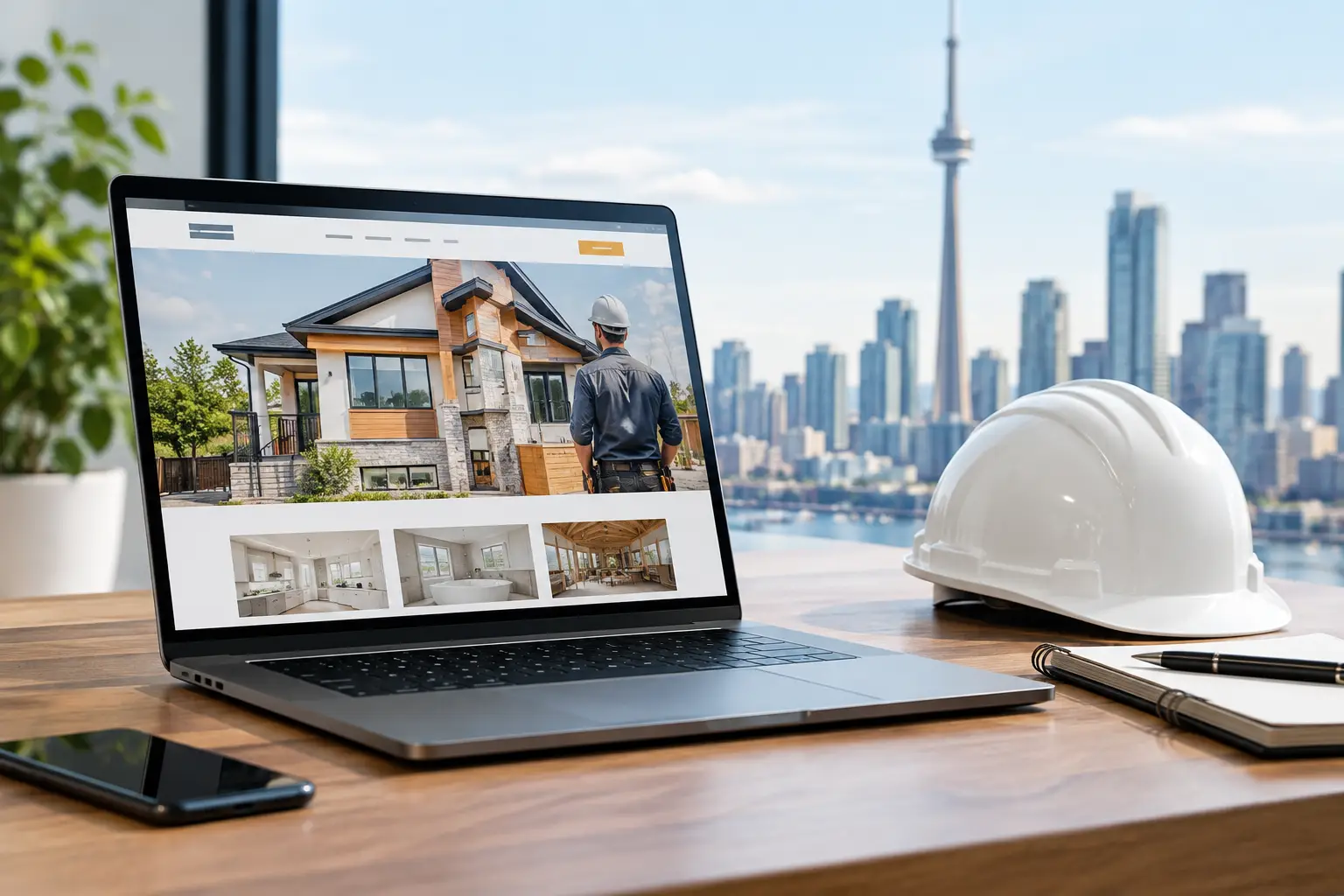
A homeowner searching for a contractor in Toronto is not looking for a clever website. They are looking for proof that you answer the phone, understand the job, work in their area, and can be trusted in their home. Effective contractor website design Toronto businesses can rely on turns that short window of attention into a call, form submission, or estimate request.
For most contractors, the website is not a digital brochure. It is a sales tool that works while your crew is on-site, your office is busy, and prospective customers are comparing three other companies in Google. It needs to make a strong case quickly, especially on a phone.
What a Contractor Website Must Do
A good-looking site is useful, but appearance alone does not bring in work. Your website needs to answer the practical questions a potential customer has before they contact you: What services do you provide? Where do you work? What kinds of projects have you completed? Are you licensed, insured, experienced, and responsive? How can they get a quote?
If those answers are buried behind generic copy, stock photos, or a slow loading page, visitors leave. That is lost work, even if your company does excellent work in the field.
The strongest contractor websites guide visitors toward one clear next step. Depending on your business, that may be calling for emergency service, requesting an estimate, booking an inspection, or sending project details with photos. The call to action should be visible at the top of every important page, not hidden at the bottom after several paragraphs.
Make the first screen count
The top section of a homepage should quickly state what you do, who you serve, and why a customer should choose you. “Reliable roofing company serving Toronto and the GTA” is clearer than a broad statement about quality craftsmanship. Pair that message with a direct action such as “Request a Free Estimate” or “Call for Service.”
A click-to-call phone number matters because many home-service leads come from mobile searches. If someone has a leaking roof, failed furnace, or damaged fence, they should not have to hunt for your number or fill out a long form before speaking to someone.
Use real proof, not vague promises
Every contractor says they provide great service. The businesses that stand out show evidence. Before-and-after photos, completed project galleries, customer reviews, trade certifications, warranty details, and clear descriptions of your process all reduce hesitation.
Real project images are especially valuable. They show the type, scale, and finish of your work while giving customers confidence that you regularly complete jobs like theirs. A renovation company can show kitchens, basements, and additions. A landscaping company can organize galleries by interlock, decks, grading, and seasonal work. A commercial contractor can feature project scope, timelines, and key challenges.
The trade-off is that photos need to be current, high quality, and optimized for web use. Uploading large camera files can slow down the site. A professional website process should preserve visual impact without sacrificing speed.
Contractor Website Design in Toronto Starts With Local Intent
Toronto is a competitive market, and broad service pages are rarely enough. A homeowner searching “bathroom renovation contractor near me” has different intent than a property manager searching for commercial snow removal. Your website should reflect the services and locations that actually drive profitable work.
This does not mean creating dozens of nearly identical pages with neighborhood names swapped out. Search engines and customers can see through thin location content. Instead, build useful pages around your core services and the areas you genuinely serve. Explain what is included, show relevant work, address common customer questions, and make it easy to request an estimate.
For example, an HVAC company may need separate pages for furnace installation, air conditioning repair, heat pumps, and maintenance plans. A general contractor may need focused pages for kitchen renovations, basement finishing, home additions, and commercial renovations. Each page gives Google clearer context and gives visitors a more relevant path to contact you.
Build for Google Maps and organic search
Your website supports local visibility, but it is only one part of the picture. Your Google Business Profile, review strategy, accurate business information, local citations, and ongoing search engine optimization also affect whether you appear in map results.
The website should reinforce the same essentials: consistent business name, service area, phone number, hours where relevant, and clear service categories. It should also include technical basics such as fast loading pages, mobile-friendly layouts, secure browsing, clean page structure, and conversion tracking.
Without tracking, it is difficult to know which marketing efforts are producing calls and quote requests. A contractor may see more website traffic after running Google Ads but have no way to identify whether those visitors became leads. Tracking form submissions, phone clicks, and campaign sources helps make marketing decisions based on results rather than guesswork.
Design for the Way Homeowners Decide
Most visitors will not read every word on your site. They scan. They check your photos, reviews, service areas, and contact options. They may compare your pricing approach or look for signs that you handle permits, cleanup, financing, emergencies, or warranty work.
That is why page structure matters. Clear headings, short sections, strong images, and direct calls to action make your information easier to absorb. Long blocks of jargon do not build trust. Plain language does.
Your website should also address the questions that create friction before someone contacts you. If estimates are free, say so. If you are insured, state it. If you work with condos, heritage homes, or commercial properties, make that clear. If your projects have minimum budgets or long booking windows, transparency can filter out poor-fit leads and protect your time.
There is no single best form length. For urgent repair services, a name, phone number, and issue may be enough. For renovation projects, asking about budget, location, project type, and target timeline can help your team qualify the opportunity. The right choice depends on your sales process and how quickly you can follow up.
Pages That Usually Produce Better Leads
A contractor site does not need dozens of pages on day one. It does need the right pages, built with a purpose. In most cases, the core structure includes a homepage, individual service pages, a projects or gallery section, an about page, reviews, and a contact page. If you serve different customer types, such as residential and commercial clients, separate pathways can make the experience more relevant.
A dedicated service page is often more valuable than a generic “Services” page because it can speak directly to a customer’s need. It can explain your approach, show examples, list what is included, and end with a focused estimate request. This also creates a stronger foundation for local SEO and paid search campaigns.
Project pages can do even more when they include useful context. Rather than posting a photo with “New deck,” explain the scope: the homeowner’s goal, materials used, challenges solved, and final result. This gives prospective customers a better sense of how you work and gives search engines meaningful content to index.
Common Website Problems That Cost Contractors Work
An outdated site can make a legitimate company appear less established than it is. So can a site that looks fine on a desktop but is difficult to use on a phone. In a local service business, small frustrations create expensive leaks in the sales process.
Watch for these issues:
- A phone number that is hard to find or cannot be tapped on mobile
- Service descriptions that are too broad to explain your specialty
- Slow pages caused by oversized images, outdated plugins, or weak hosting
- Contact forms that fail to send notifications or ask for too much information
- No visible reviews, project proof, licenses, insurance details, or warranties
- No tracking for calls, forms, Google Ads, or organic search leads
Fixing these problems does not always require a full rebuild. Sometimes a focused redesign, better service pages, improved forms, and technical cleanup can produce meaningful gains. If the site is difficult to update, poorly structured, or built on a system your team cannot manage, a new custom website may be the more practical investment.
Pair Website Design With Lead Generation
A website cannot generate demand by itself if nobody can find it. Local SEO helps your business earn visibility over time for relevant searches. Google Ads can put your services in front of people actively looking for help now. Social media can reinforce credibility by showing active projects and customer feedback.
The best mix depends on your trade, service radius, job value, seasonality, and budget. Emergency plumbers and restoration companies may benefit from immediate paid search visibility. Renovation firms with longer sales cycles may need a stronger portfolio, local SEO, and follow-up process. A low-cost lead is not automatically a good lead if it rarely turns into profitable work.
Drop That Code builds contractor websites around this full path: visibility, trust, inquiry, tracking, and follow-up. The goal is not more clicks for their own sake. It is a site that gives the right prospects a reason to contact your business.
A contractor website should make your next customer feel confident before the first conversation. Show the work, explain the service, make contact effortless, and measure what happens after the click. That is how a website starts earning its place in your sales process.



Comment (1)
Best Website Features for Local Contractors - Drop That Code
[…] conversion-focused partner such as Drop That Code can connect website design, local SEO, and tracking so your online presence […]