



A homeowner with a burst pipe is not researching marketing theory. They are searching for a nearby plumber, checking ratings, calling the business that looks credible, and moving on quickly. That is why local search trends matter so much for service businesses: visibility only counts when it turns a high-intent search into a call, form submission, booking, or visit.
For local businesses, Google Search and Google Maps are often the first sales conversation. The businesses that win are not always the largest. They are the ones that make it easy for Google and customers to understand what they do, where they work, and why they can be trusted.
The Local Search Trends Changing How Customers Choose
Map results are becoming the main decision point
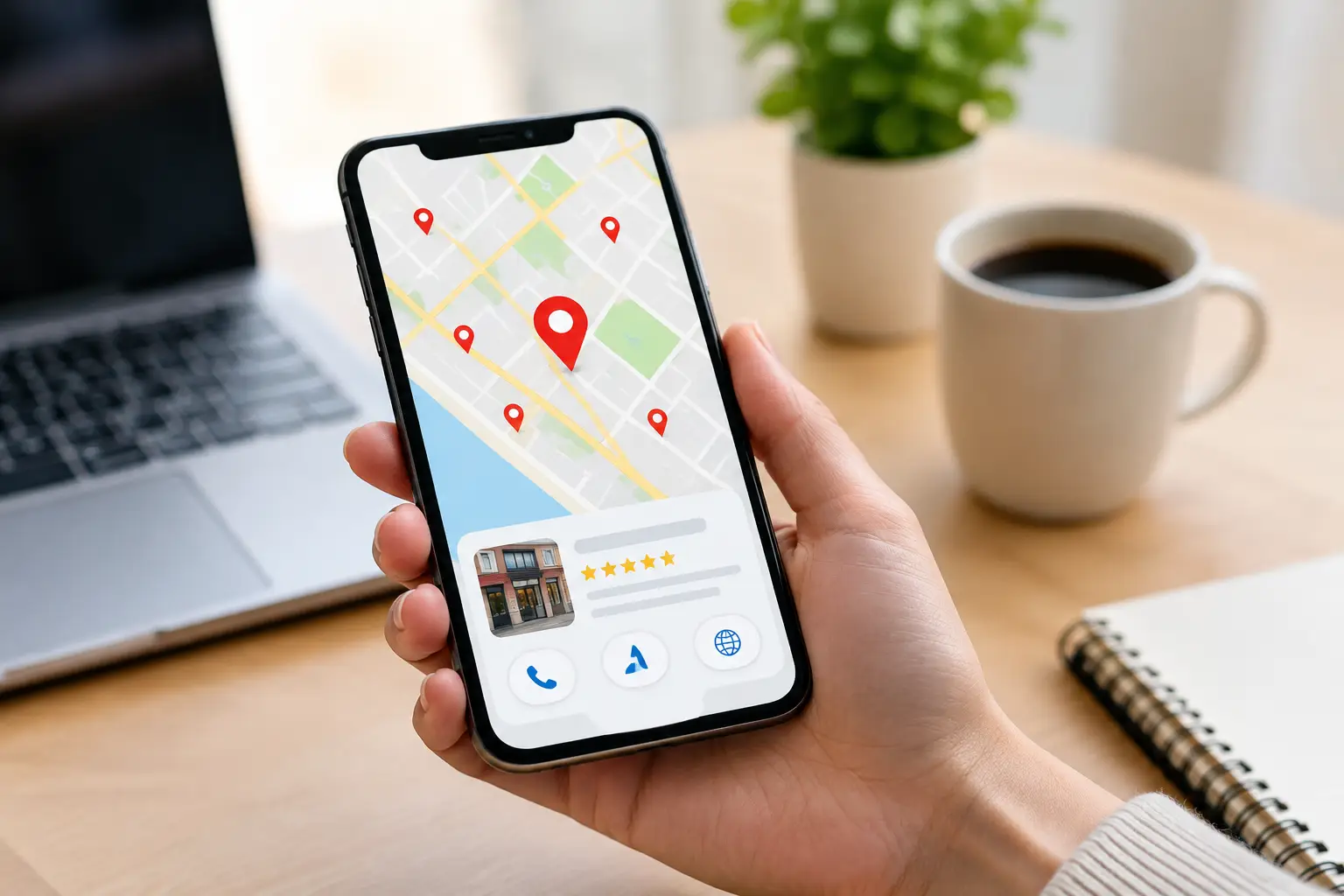
For many service searches, customers see map listings before they reach traditional website results. A search such as “roof repair near me” or “family dentist in [city]” gives people a shortlist immediately. They can compare distance, hours, reviews, photos, and contact options without scrolling far.
This makes a complete, accurate Google Business Profile a core lead-generation asset, not an administrative task. Your primary category needs to match your main service. Your business name, address, phone number, service areas, hours, and website should be accurate everywhere they appear online. If your office is in one city but you serve several nearby communities, be clear about that service area without creating misleading location pages or fake addresses.
Map visibility is competitive because proximity is only one factor. Relevance and prominence matter too. A business with clear services, strong reviews, recent activity, and a trustworthy website can compete well even when it is not the closest option.
Reviews now influence more than reputation
Reviews affect the decision a customer makes in seconds, but they also give search engines useful context about your business. When customers naturally mention services, staff, responsiveness, or neighborhoods, they reinforce what your company is known for.
The goal is not to chase a perfect rating or pressure customers into writing keyword-heavy reviews. A steady flow of honest, recent feedback is more credible and more useful. Ask after a completed job, a successful appointment, or a positive delivery experience. Make the request simple, and respond professionally to both praise and criticism.
A thoughtful response to a negative review can protect trust. Avoid arguing in public. Acknowledge the concern, offer a practical next step, and take the detailed conversation offline. Prospective customers are usually looking less for perfection than for evidence that a business takes responsibility.
Mobile experience decides whether visibility becomes a lead
Local searches happen on phones, often when the customer needs help now. If your site is slow, your phone number is hard to tap, or your contact form is frustrating, strong rankings can still produce weak results.
A conversion-focused local website should make the next action obvious. Put a clickable phone number in a visible position, use clear service pages, keep forms short, and show proof close to the call to action. For a contractor, that may mean project photos, licensing details, and service-area information. For a clinic, it may mean provider credentials, insurance guidance, and an easy appointment request.
Speed matters, but usability matters just as much. Heavy image files, intrusive pop-ups, confusing navigation, and vague headlines all create friction. A beautiful website that leaves visitors wondering whether you serve their area is not doing its job.
Local Search Trends Need Better Service Pages
One broad “Services” page is rarely enough for a business that offers multiple high-value services. Search engines and potential customers need specific information. A landscaping company should explain lawn care, interlock installation, and seasonal cleanup separately. A law firm should not expect one generic practice-area page to compete for every legal service it handles.
Each service page should answer the questions a buyer has before calling: What is included? Who is it for? Which areas do you serve? What makes your process dependable? What should the customer do next? Add original photos, useful examples, clear pricing guidance where appropriate, and FAQs based on real customer conversations.
Location pages can help when they are genuinely useful. If you serve multiple cities, a page for each major service area should contain local details, relevant services, original proof of work, and practical information for that market. Simply swapping city names on identical pages is thin content and can weaken trust. It also gives customers a poor experience when the page says very little about their actual needs.
What Search Engines Can Understand Is What They Can Show
Technical SEO is less visible than reviews or photography, but it supports every local marketing effort. Search engines need to crawl your website, understand its pages, and connect the business information on your site with your public profiles.
Start with the basics: one preferred version of the site, secure pages, fast loading times, mobile-friendly layouts, clear page titles, logical heading structure, and no broken important pages. Your name, address, and phone number should be consistent across your website and major business profiles. A business that has moved locations, changed phone numbers, or rebranded should clean up old information before it confuses customers.
Structured data can also help search engines interpret details such as business type, contact information, hours, and reviews. It is not a shortcut to rankings, but it reduces ambiguity. That is valuable when competing against businesses with similar names or overlapping service areas.
Paid Search and Organic Visibility Work Better Together
Organic local rankings can take time, especially in competitive service categories. Google Ads can place a business in front of ready-to-buy customers while SEO builds longer-term visibility. The best approach depends on your market, budget, urgency, and sales capacity.
For example, an emergency restoration company may benefit from paid search because a lead can be worth a great deal and the buying window is short. A specialty retailer may see better results from a mix of product-focused ads, local inventory visibility, and organic category pages. There is no universal channel that wins every time.
The mistake is treating ads and SEO as separate silos. Paid search data can reveal which services and messages generate calls. Those insights can improve service pages, Google Business Profile updates, and future content. Organic performance can also identify neighborhoods, services, and questions worth supporting with targeted campaigns.
Measure Leads, Not Just Rankings
A higher ranking is encouraging, but it is not the finish line. Local search reporting should show whether marketing is producing business opportunities. Track phone calls, contact forms, appointment requests, quote requests, direction requests, and booked jobs when possible.
Call tracking can be useful, but it must be set up carefully so your core business number remains consistent where it needs to be. Form tracking should distinguish between a serious estimate request and a low-value general inquiry. If a business uses a CRM, connecting lead sources to closed revenue provides a much clearer picture of which channels are worth the investment.
Here are five practical checks worth reviewing each month:
- Are your Google Business Profile details, hours, categories, and service areas still accurate?
- Did you receive new reviews, and did you respond to them appropriately?
- Which service pages generated calls or form submissions?
- Are mobile visitors able to contact you quickly?
- Did paid campaigns produce qualified leads at an acceptable cost?
The answers often reveal more than a ranking report alone. A page ranking in position three that produces quality calls may be more valuable than a position-one page that attracts the wrong audience.
Build Trust Before the Customer Needs You
Local search is moving toward faster decisions based on clearer signals. Customers want proof that a business is nearby, active, legitimate, and capable of solving their specific problem. Search engines are trying to surface the same qualities.
That creates an advantage for businesses willing to maintain the fundamentals: accurate profiles, useful service pages, fast mobile websites, real reviews, and lead tracking that shows what is working. Drop That Code approaches local SEO, website development, and paid search as connected parts of one system because that is how customers experience them.
The best next move is usually not a dramatic redesign or a rush to publish dozens of pages. Start with the point where potential customers lose confidence or cannot take action, fix it properly, and keep improving from real lead data.