


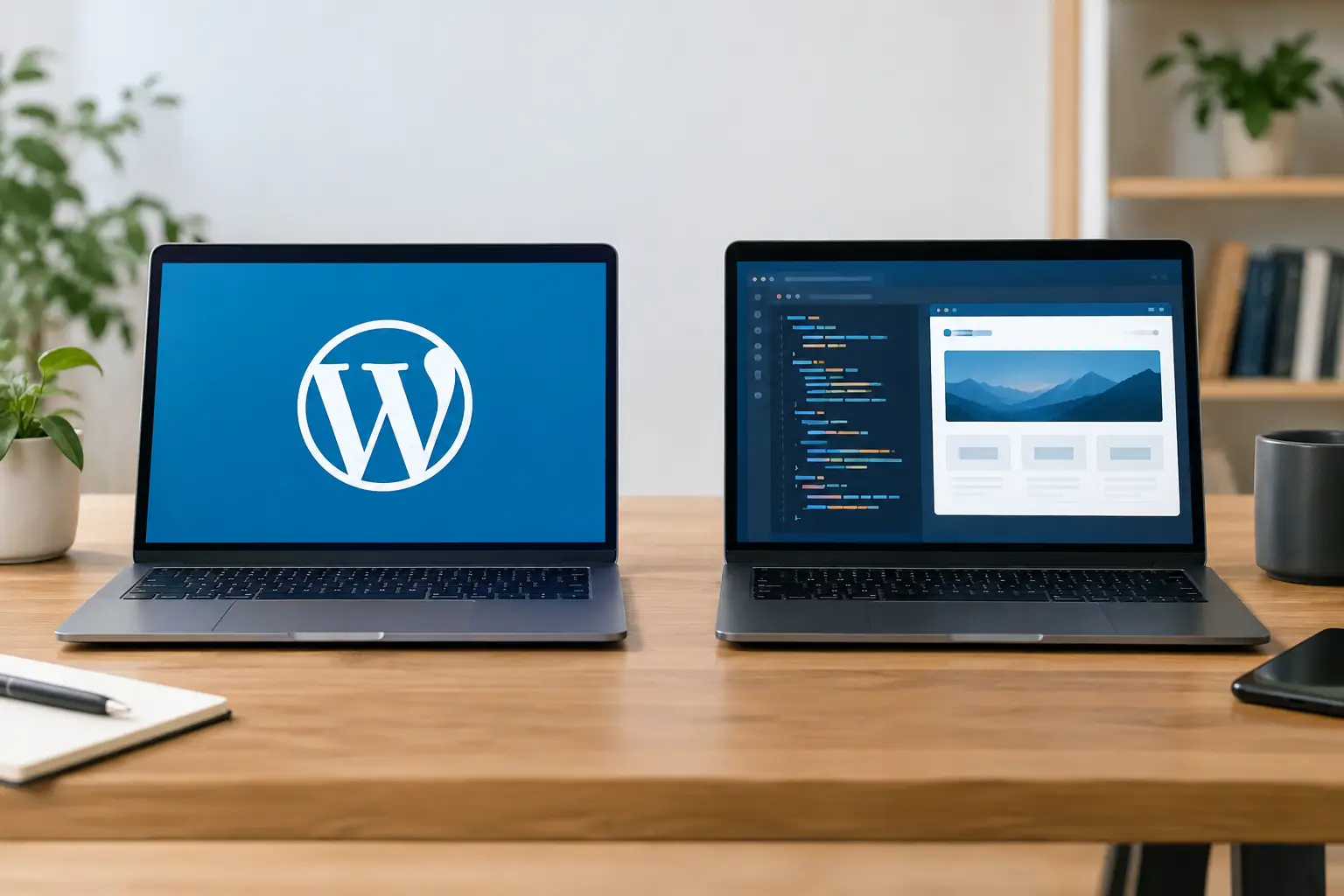
A contractor loses a call because their contact form fails on mobile. A clinic cannot update its services without emailing a developer. An online store loads slowly enough to lose shoppers before checkout. These are not design problems alone. They are platform decisions. When comparing WordPress vs custom websites, the right choice comes down to how your business needs to generate, manage, and scale leads.
For many small and midsize businesses, WordPress provides the fastest path to a professional, search-friendly website. For others, a fully custom build is worth the higher investment because the business has unique workflows, complex integrations, or performance requirements that templates and plugins cannot handle well. Neither option is automatically better. The goal is to choose the option that supports sales without creating unnecessary cost or maintenance.
What a WordPress Website Really Gives You
WordPress is a content management system that allows business owners and marketing teams to update pages, publish articles, add services, and manage basic site content without writing code. It can be designed to look entirely original. A well-built WordPress website is not the same as installing a generic theme, changing a few colors, and hoping it converts.
For a local service business, WordPress is often a practical fit because it supports the things that drive visibility and inquiries: service pages, location pages, online forms, reviews, galleries, blog content, conversion tracking, and clear calls to action. It also gives your team control over common changes, such as updating service areas, posting promotions, or adding a new team member.
Speed matters here. A WordPress site can typically be planned, designed, and launched faster than a custom platform because the core publishing tools already exist. That makes it a strong option for companies replacing an outdated website, recovering from a stalled project, or preparing for an SEO or Google Ads campaign.
The limitation is not WordPress itself. The limitation is how it is built. Too many plugins, poorly coded themes, cheap hosting, and no maintenance plan can create slow load times, security issues, and unreliable forms. WordPress works best when the site is built with a focused plugin stack, clean page structure, mobile testing, and ongoing updates.
When a Custom Website Makes Business Sense
A custom website is built around your specific requirements rather than around a pre-existing content management framework or theme. It may use a custom front end, a tailored admin dashboard, or a specialized application architecture. The point is not to make the project more technical. The point is to solve a business problem that standard website tools do not solve well.
A custom build may be the right move if your site needs to connect deeply with internal software, calculate complex estimates, manage unusual customer portals, display large amounts of live data, or support a process that is central to your operations. For example, a company that needs customers to configure a highly specialized product, request pricing based on multiple variables, and send that information into a CRM may outgrow a standard WordPress setup.
Custom development can also give you tighter control over performance and functionality. Instead of carrying features you will never use, the site can be engineered around the exact user journey you want. That can be valuable for funded startups, larger ecommerce operations, and established businesses with complex needs.
However, custom does not automatically mean faster, more searchable, or more effective at generating leads. A custom site still needs thoughtful navigation, strong service messaging, fast hosting, technical SEO, conversion tracking, and regular testing. It also requires a development partner for many future changes, unless a user-friendly content system is included in the project scope.
WordPress vs Custom Websites: Cost and Timing
Budget and launch timing are usually the first practical differences. WordPress is generally more cost-effective upfront because its content tools and many standard functions are already available. A custom design on WordPress can still look polished and tailored to your brand while keeping the project focused on pages and features that support lead generation.
Custom development takes more planning, design, testing, and quality assurance. Every feature must be specified and built. That can be the right investment when the website is functioning as a core business system, but it is often excessive for a company that primarily needs to explain services, rank in local search, and turn visitors into phone calls or form submissions.
Think beyond launch cost. A low-cost website can become expensive if it needs to be rebuilt within a year, cannot support your marketing campaigns, or creates constant technical problems. On the other hand, paying for a custom platform before your business has validated the need can tie up budget that would produce better returns through local SEO, paid search, professional photography, or landing pages.
The most useful question is not, “What is the cheapest website?” It is, “What does the website need to do in the next two to three years?” If the answer is publish content, showcase work, rank locally, capture leads, and connect to common marketing tools, WordPress is often the sensible choice. If the answer involves proprietary workflows or complex customer interactions, custom development deserves a closer look.
SEO, Speed, and Lead Generation
Search engines do not rank a site simply because it uses WordPress or custom code. They evaluate signals such as page quality, relevance, crawlability, mobile usability, site speed, internal linking, and trust. Both options can perform well in search when these fundamentals are handled properly.
WordPress has an advantage for businesses that need to create and update SEO content frequently. Adding service pages, location pages, FAQs, case studies, and educational articles is straightforward when the site is configured correctly. That flexibility helps a growing business respond to new offerings and search opportunities without waiting weeks for minor edits.
A custom site can be excellent for SEO too, particularly when it is built with clean code, efficient assets, logical URL structures, and editable metadata. But content publishing must be considered early. If your team needs to make regular changes, ask exactly how pages, titles, images, redirects, and structured content will be managed after launch.
For lead generation, the platform matters less than the experience. A visitor should understand what you do, who you serve, why they should trust you, and what to do next within seconds. Clear phone numbers, short forms, proof of results, fast pages, and well-placed calls to action will usually have more impact than a debate about the underlying technology.
Questions to Ask Before You Choose
Before approving a website project, get specific about ownership, maintenance, and future growth. Ask whether you can update core content yourself, what is included in ongoing support, how software updates and backups will be handled, and whether you own the final website files and accounts.
You should also ask how the site will support marketing. Can it track calls and form submissions? Can landing pages be created for Google Ads campaigns? Will it include proper page titles, redirects, XML sitemaps, and mobile performance testing? Is the contact form protected against spam and tested across devices?
These questions protect you from a website that looks good in a launch presentation but becomes hard to manage six months later. They also reveal whether a proposed custom solution is necessary or simply more complicated than your business needs.
Choose the Platform That Supports the Next Sale
For many service businesses, a professionally built WordPress website offers the best balance of speed, control, SEO readiness, and cost. It can provide a credible online presence quickly while leaving room in the budget for the marketing that brings visitors to the site.
A custom website is a better fit when your requirements are genuinely unique and the website needs to operate as more than a marketing tool. The investment should be tied to a clear operational gain, not just the appeal of having something built from scratch.
The strongest decision starts with your customer journey: how people find you, what they need to see before contacting you, and what happens after they submit a form or pick up the phone. Drop That Code helps businesses turn those answers into websites built to earn trust, capture leads, and support the next stage of growth.